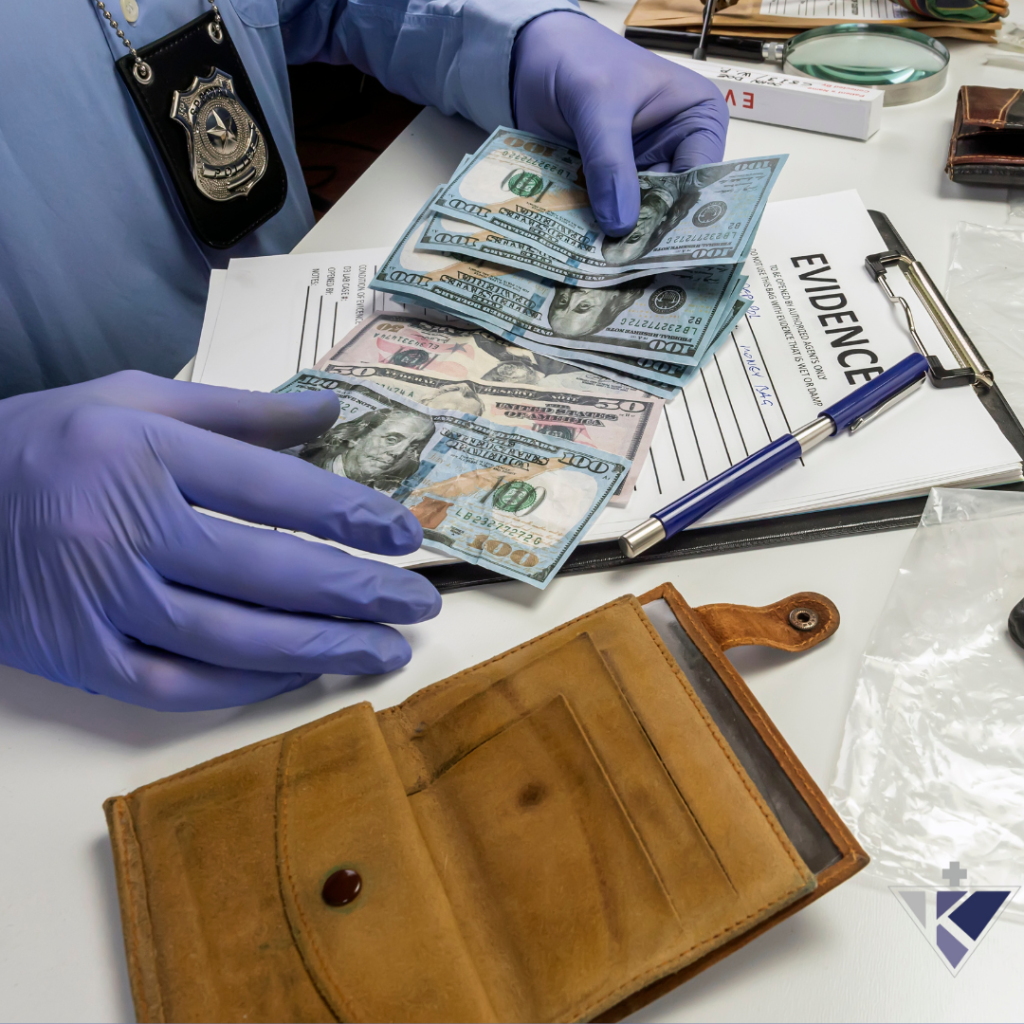
What happens when your personal property is taken by the police as evidence of a crime?
Can you get this property back? What if your property is taken and the investigation takes a
long time? Do you have to wait months, or even years, for the state to find and prosecute a
perpetrator before you receive your property back?
How Long Can Police Hold Your Property as Evidence in North Carolina?
Under N.C. Gen. Stat. Ann. § 15-11.1(a), a law-enforcement officer who “seizes property pursuant to lawful authority, shall keep the property under the direction of the court or magistrate as long as necessary to assure that the property will be produced at and may be used as evidence in any trial.” This statute gives the police broad authority to confiscate and hold your property during an ongoing criminal investigation. It also allows the state to retain your property until they conclude any trials where it may be used as evidence.
This means the state could potentially hold your property for an incredibly long time. What if the case becomes a cold case and is never brought to trial? Or what if the investigation lasts for years before reaching court? Needless to say, this can create serious issues for property owners, as the statute effectively allows them to be deprived of their belongings for an extended period.
Returning Seized Property Under N.C. Gen. Stat. § 15-11.1
“[U]pon application by the lawful owner or a person, firm or corporation entitled to possession or upon his own determination, the district attorney may release any property seized pursuant to his lawful authority if he determines that such property is no longer useful or necessary as evidence in a criminal trial and he is presented with satisfactory evidence of ownership.”
In plain terms, this means that if your property has been seized, you can apply to have it returned. The district attorney may release the property if two conditions are met:
- The property is no longer needed as evidence in a criminal trial.
- You can prove that you are the lawful owner of the property.
It’s important to remember that the decision is entirely up to the district attorney—they are not required to release your property.
What to Do If the Police Won’t Return Your Property
If the district attorney refuses to release the property, the statute provides another option for property owners: they may apply to the court to have their seized property returned. The court, “after notice to all parties, including the defendant, and after hearing, may in its discretion order any or all of the property returned to the lawful owner.” In other words, the court holds a hearing to decide whether to return the property and has discretion over the outcome.
Can the Court Let You Have Your Property Back If They Use Photos Instead?
The statute also states that “photographs or other identification or analyses made of the property may be introduced at the time of the trial provided that the court determines that the introduction of such substitute evidence is not likely to substantially prejudice the rights of the defendant in the criminal trial.” In other words, a judge may release seized property to its owner if photographs or other analyses of the property are sufficient to serve as evidence in the trial. However, even in this case, the court still has the discretion to retain the property.
Need Help Getting Your Seized Property Back?
Regaining seized property from the state can be a challenging process, but King Law Offices is here to guide you every step of the way. If you need legal representation for this type of case—or any other legal matter—contact King Law Offices today at (888) 748-5464.