
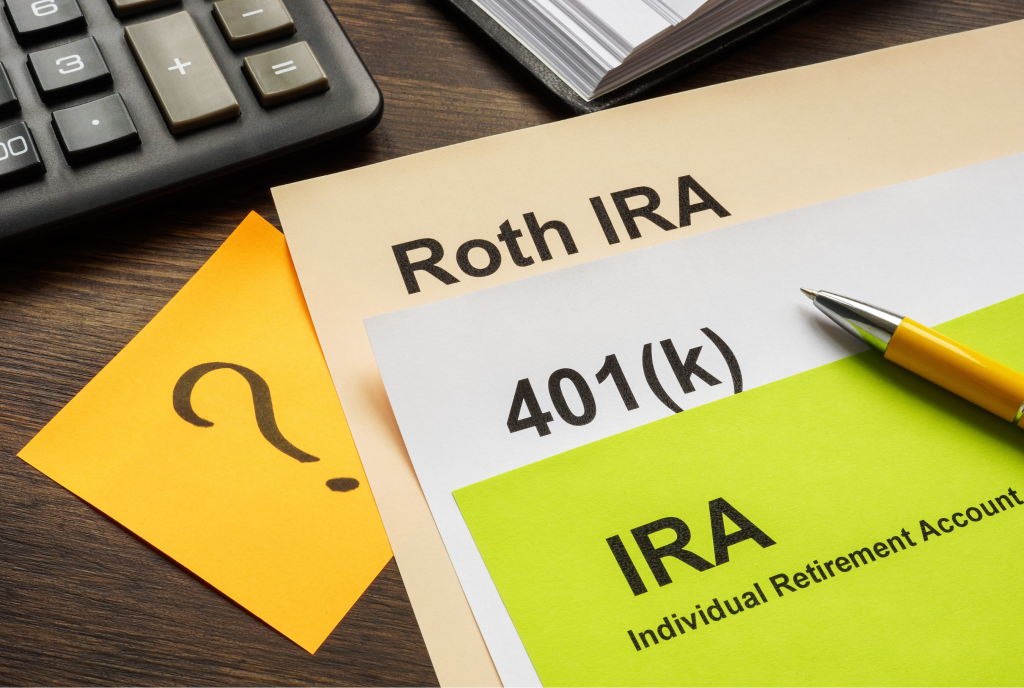
If you are reading this, you may have recently lost someone. Along with grieving, you may now be dealing with unfamiliar IRS rules and deadlines that no one prepared you for.
What follows is a general overview of how inherited retirement accounts work. The rules that apply to your situation depend on your relationship to the person who died, when they passed, and how the account was set up. Those details matter and getting them wrong has real consequences.
Why This Is More Complicated Than Most People Expect
Inheriting a retirement account is not like inheriting a bank account. You cannot combine it with your own retirement savings, and you are required to take distributions on a timeline the IRS sets not one you choose.
A few things that consistently catch people off guard:
- Whether the original owner had already started taking required minimum distributions before they died changes what you are required to do and when
- A will has no control over where an IRA goes. Beneficiary designations operate entirely separately from estate documents an outdated or blank form can override years of careful planning
- Trusts named as beneficiaries face different rules depending on when the trust was drafted and whether it meets specific IRS requirements
- If no beneficiary was named, the account does not pass directly to any individual and the options available to heirs shrink considerably
Most families dealing with an inherited retirement account encounter more than one of these complications. The sections below explain each one.
Who Can Inherit an IRA and What It Means
The rules that apply to an inherited IRA depend on your relationship to the person who passed away. These differences are significant as they can affect how long you’re able to manage the account and how much you may owe in taxes. Generally, beneficiaries fall into three main categories:
| Beneficiary Type | Who Qualifies | General Timeline |
|---|---|---|
| Eligible Designated Beneficiary | Surviving spouse, minor child of owner, disabled or chronically ill individual, or someone within 10 years of the deceased’s age | Most flexible speak with an attorney |
| Designated Beneficiary | Most adult children, siblings, and other non-spouse heirs | Generally 10 years from date of death |
| Non-Designated Beneficiary | Estates, certain charities, some trusts | Shortest timeline speak with an attorney |
These are general categories only. Which rules apply to your specific situation depends on details a qualified attorney or tax professional should review.
The 10-Year Rule: What It Actually Requires
Most non-spouse beneficiaries must withdraw the entire balance of an inherited IRA within 10 years of the original owner’s death. This rule was established under the SECURE Act and applies to accounts inherited from owners who died after December 31, 2019.
The part that trips people up: the 10-year rule does not mean nothing is due until year 10. If the original owner had already begun taking required minimum distributions before they died, annual withdrawals may be required throughout the entire period. The IRS finalized this requirement in 2024, and the grace period that allowed many beneficiaries to skip those annual distributions without penalty ended with the 2024 tax year.
Distribution requirements vary by case. A tax professional or estate attorney can determine what applies to your specific situation.
What Happens If No Beneficiary Was Named
When no beneficiary is named, the IRA passes to the estate, which triggers probate and a compressed withdrawal timeline that gives heirs far less flexibility than a properly designated account would have provided. Surviving spouses also lose rollover options that would otherwise be available to them.
Even a carefully written will has no effect on this. Beneficiary designations on retirement accounts operate entirely separately from estate documents and an outdated form naming someone who has already passed away creates the same problem as a blank one.
The probate process, timeline, and costs differ across North Carolina, South Carolina, and Tennessee. North Carolina intestacy laws govern what happens to assets that pass without a valid designation or will. If you are dealing with an account that has no named beneficiary, an estate attorney familiar with the relevant state’s process is the right first call.
Surviving Spouse: Your Options Are Different
A surviving spouse has more flexibility than any other beneficiary category, including the ability to roll the inherited account into their own IRA rather than treating it as an inherited account. That choice carries long-term implications depending on age, income, and whether access to funds before retirement age is needed.
The right answer for the immediate tax question is not always the right answer for the full picture. Understanding how estate planning documents work together can help clarify how an inherited account fits into a broader plan. Both a financial advisor and an estate attorney can help evaluate which path makes the most sense.
What About an Inherited 401(k)?
If your loved one had a workplace retirement account, the general distribution rules are similar to an IRA but the first step is different. An inherited 401(k) typically needs to be moved into an inherited IRA before those rules apply, and most workplace plans require beneficiaries to act within a specific timeframe after the account owner’s death.
Failing to act within that window can result in the plan administrator distributing the funds directly, triggering immediate tax consequences with no flexibility. If your loved one had a 401(k) through an employer, contacting the plan administrator early is important.
When You Need an Estate Attorney
A financial advisor helps you manage how and when funds are distributed. An estate attorney steps in when the legal side gets complicated. The two roles are complementary, not interchangeable.
You likely need an estate attorney if:
- No beneficiary was named and the account is passing through the estate
- A trust was named as beneficiary and the trust language has not been reviewed since the SECURE Act passed in 2019
- There is a dispute among family members over who should receive the account
- The deceased had no estate plan at all
- You are dealing with accounts across multiple states
- You or a family member receives Medicaid and the inheritance may affect benefit eligibility
On the trust point specifically: trusts can be structured to receive retirement accounts, but the trust language must meet specific IRS requirements for the more favorable distribution rules to apply. Trusts drafted before 2020 may need to be reviewed and updated and that is a legal question, not a financial one.
Frequently Asked Questions
What is an inherited IRA?
An inherited IRA is a retirement account transferred to a named beneficiary after the original owner dies. Unlike your own retirement account, you cannot contribute to it or combine it with your own savings and you are required to take distributions on a schedule set by the IRS based on your relationship to the deceased.
What is the 10-year rule for inherited IRAs?
The 10-year rule requires most non-spouse beneficiaries to withdraw the full balance within 10 years of the account owner’s death. Whether annual withdrawals are also required during that period rather than a single distribution at the end depends on whether the original owner had begun taking required minimum distributions before they died.
What happens if no beneficiary was named?
The account passes to the estate, triggers probate, and a shorter, less flexible withdrawal timeline applies. An estate attorney can help you understand what the probate process looks like in your state and what options remain.
Can a surviving spouse treat an inherited IRA as their own?
Yes, and it is often the right move but not always. Rolling the account into your own IRA delays required minimum distributions and restores full naming rights for new beneficiaries, but it also means early withdrawal penalties apply if funds are needed before retirement age. Which path is right depends on your full financial picture.
What is the penalty for missing a required distribution?
A penalty applies to the amount that should have been withdrawn. A correction window exists that can reduce it, but that window is time-limited. If you have missed distributions, acting sooner preserves more options.
Do I need an estate attorney, a financial advisor, or both?
If any of the complications listed above apply no named beneficiary, a trust involved, a dispute, multiple states, or no estate plan start with an estate attorney. The legal picture needs to be clear before distribution timing and tax planning decisions are made. A financial advisor handles that second layer.
King Law Offices Is Here to Help
King Law Offices has stood beside families across North Carolina, South Carolina, and East Tennessee since 2002. With offices rooted in the rural communities of the Southeast, the firm was built on a simple belief: when a family is grieving, the last thing they should have to navigate alone is a set of rules they have never encountered before.
The estate planning and probate attorneys at King Law work with families to understand what they have inherited, what the law requires of them, and what steps protect them from consequences they did not see coming. Whether there is a named beneficiary, a trust involved, or an estate still working through probate, the advantages of working with an experienced estate planning attorney are clearest when the stakes are highest.
If you are dealing with an inherited retirement account or a loved one’s estate in NC, SC, or Tennessee, reach out to King Law today. Call (888) 748-5464 or schedule your consultation online. Small towns. Big relationships.
*The information contained in this article is provided for general informational purposes only and should not be construed as legal advice. Laws, statutes, regulations, and legal interpretations may change over time and can vary by jurisdiction. The information presented in this article is accurate to the best of our knowledge as of June 2026. Readers should verify current legal requirements and consult a qualified attorney regarding their specific circumstances before making any legal decisions or taking action based on the information provided.






