
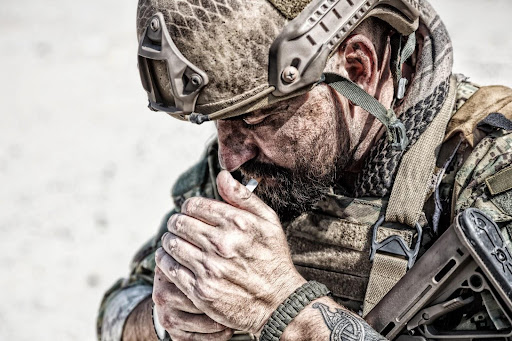
According to the National Institutes of Health, binge drinking is common for actively deployed military personnel in the United States. Although drug use is less common in the military, it is certainly not unheard of. Whether a soldier is engaged in alcoholism or drug use, both activities fall into the category of “substance abuse.” Substance abuse in the military can have serious consequences, and military personnel should become aware of these potential penalties. Those who have already been accused of substance abuse in the military might want to consult with experienced defense attorneys in Tennessee. Lawyers who have specific experience with military law and regulations may be particularly suitable in this scenario, so consider continuing this conversation by contacting King Law Offices at (888) 748-5464.
How Does the United States Military Treat Drugs?
The United States military has zero patience for drug users. Enlisted personnel who fail drug tests face swift consequences, which often involve dishonorable discharge. This “zero-tolerance” policy has successfully eliminated almost all drug use across military branches, and some believe that this is why alcohol is now the substance of choice for modern soldiers. Enlisted personnel can expect random drug tests, and the Department of Defense has become highly proficient at weeding out those struggling with substance abuse. Although it might seem harsh, many soldiers who develop substance abuse disorders never get a second chance at their military careers.
This is why it is so important to fight allegations of drug use, potentially with help from an experienced defense attorney. While modern drug tests are reliable, they are not exactly foolproof. False positive results are not unheard of, and soldiers might be able to challenge the validity of these tests. Those who believe that they have erroneously tested positive for illegal drugs may want to contact King Law Offices for guidance. With help from a lawyer, it may be possible to prove that something legal triggered the positive result, such as prescription medication.
Is Prescription Drug Abuse Legal in the U.S. Military?
Soldiers might mistakenly believe that as long as they consume legal, prescription drugs, they are immune to the consequences of substance abuse in the military. This is not true, as the Department of Defense understands that prescription drug abuse can be just as dangerous as illegal drug abuse. Even if the drug in question is approved and legal to acquire at pharmacies, soldiers still might face consequences for abusing it. Those who test positive for certain prescription drugs might need to explain how they acquired the substances, and whether they have valid prescriptions.
Even if enlisted personnel have valid prescriptions, they can still face consequences for operating civilian and military vehicles while under the influence of prescription drugs. The definition of “intoxication” in this context is quite broad, and virtually anything that affects the ability of a soldier to drive safely could lead to legal consequences.
DUIs Often Expose Alcohol Abuse Among Soldiers
Alcohol abuse is the most common form of substance abuse in the military, and a DUI conviction represents a telltale sign of this. Soldiers may face consequences for driving drunk in many situations. First, a soldier might face consequences under Tennessee law for driving under the influence off-base. According to the Tennessee Department of Safety & Homeland Security, even a first-offense DUI can lead to up to 11 months of jail time. Fines can reach up to $1,500 for a simple DUI, and other consequences include license revocation, mandatory alcohol treatment programs, and ignition interlock. DUIs involving aggravating factors like high BAC levels or severe crashes could lead to much more serious consequences under state law.
When commanders find out that their subordinates have been charged with these offenses, they may impose additional consequences under military law. The most obvious example is a court-martial, which can lead to dishonorable discharge and other penalties. A commander might also choose non-judicial punishment (NJP), which is a more flexible option that may involve various consequences. Examples of NJP include latrine duties, pay cuts, and reductions in rank (demotions). Note that a service member may also face consequences for driving military vehicles under the influence. In this situation, state laws may not apply – especially if the DUI offense occurred on-base.
The Consequences of a Substance-Abuse-Related Dishonorable Discharge
A dishonorable discharge not only ends a military career, but it also removes various benefits associated with military service. For example, someone who receives a dishonorable discharge for smoking marijuana might lose their access to affordable post-secondary education (GI Bill). A soldier who is dishonorably discharged for crashing an M1 Abrams tank while drunk might also miss out on VA Health Care. These benefits can prove extremely useful after soldiers leave military service, and many people enlist primarily to experience these benefits.
A dishonorable discharge may also become a blemish on the professional record of a service member, making it difficult for them to find reliable employment. For example, a soldier might have plans to go into the private security industry after leaving service. If this individual receives a dishonorable discharge for drug or alcohol abuse, this would likely reflect poorly on their professionalism and reliability. These are some of the most overlooked consequences of substance abuse in the military, and they highlight the need to defend effectively against such allegations.
Learn More About Substance Abuse in the Military With King Law Offices
Substance abuse in the military can lead to various consequences. From a career standpoint, a failed drug test or DWI may affect the ability of a soldier to advance through the ranks. Depending on the circumstances, a court-martial may also occur due to substance abuse allegations. Outside of the military, state and even federal laws may apply to situations involving substance abuse. Drug or alcohol problems can also lead to psychological and family issues, including divorce. To address all of these varying consequences, consider continuing this conversation alongside a military defense lawyer in Tennessee. Soldiers and civilian contractors have the option to contact King Law Offices at (888) 748-5464 for more information.






