
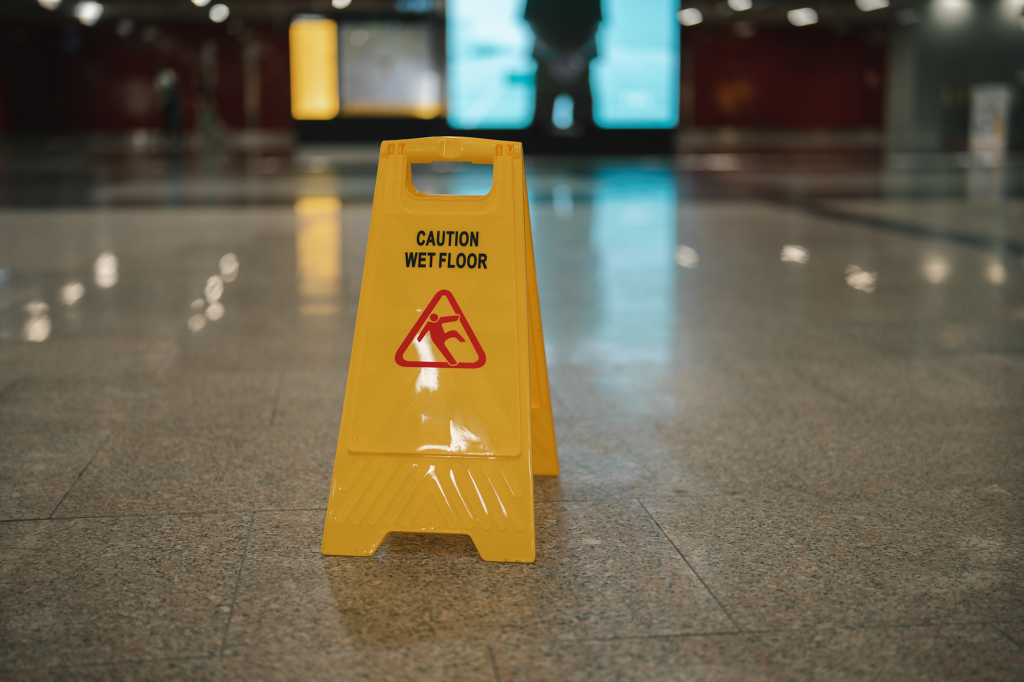
A slip and fall accident can happen anywhere and anytime. Learn who’s liable, what you must prove, and how long you have to file under SC premises liability law.
One minute you’re picking out tomatoes at the grocery store. The next, you’re on the floor wondering how a routine errand turned into a trip to the ER. Slip and fall accidents happen fast, and the question that follows is always the same: who is going to pay for this?
In South Carolina, the answer comes down to premises liability, the law that decides when a property owner is responsible for injuries on their property. Whether you fell at a grocery store in Greenville, a restaurant in Columbia, or an apartment complex in Spartanburg, the same rules apply. Here’s how they work.

What Is Premises Liability, and How Does It Apply in South Carolina?
Premises liability holds property owners responsible when someone is injured on their property due to an unsafe condition. In South Carolina, the duty an owner owes you depends on why you were on the property. State law sorts visitors into three categories:
Trespassers — people on the property without permission. Owners owe almost nothing, except a duty not to intentionally cause harm. SC’s attractive nuisance doctrine is an exception that protects child trespassers from things like unfenced pools.
Invitees — people on the property for the owner’s business benefit, like store customers, restaurant diners, hotel guests, apartment tenants, and medical patients. Owners owe invitees the highest duty: inspect the property, fix hazards, and warn about dangers that can’t be immediately repaired.
Licensees — social guests and others on the property with permission but for their own purposes. Owners must warn about known, non-obvious dangers but don’t have to inspect for hidden hazards.
Most slip and fall cases involve invitees, because most falls happen at businesses open to the public, and that’s where injured people have the strongest legal footing.
What Do You Have to Prove to Win a Slip and Fall Case in SC?
South Carolina law requires you to prove four elements:
- Duty of care. The owner owed you a legal duty based on your visitor status.
- Breach of duty. The owner failed to meet that duty by creating, ignoring, or failing to warn about a hazard.
- Causation. That breach caused your fall and injuries.
- Damages. You suffered real harm; medical bills, lost wages, pain and suffering.
The hardest element is usually breach. Property owners aren’t expected to be perfect, just reasonable. You typically need to show either actual notice (an employee saw the hazard and ignored it) or constructive notice (the hazard had been there long enough that a reasonable inspection would have caught it). If a customer dropped a jar 30 seconds before you slipped, the store probably isn’t liable. If that spill sat there for an hour while employees walked past, it’s a different case.
What If You Slipped at a Grocery Store, Restaurant, or Someone’s Home?
Where you fell determines both your visitor status and the practical realities of your case.
Grocery Stores and Retail – Customers are invitees, with the highest level of protection. Stores must inspect regularly, clean spills promptly, and post warnings. Common causes include leaking refrigeration units, freshly mopped floors without signs, produce on the floor, and rain tracked in near entrances. Most chains have written inspection protocols, powerful evidence when they aren’t followed.
Restaurants and Bars – Diners are also invitees. Common hazards: grease near kitchen entrances, spilled drinks, dropped food, wet bathroom floors. Many restaurants have surveillance cameras, but footage is often overwritten in days or weeks. Acting fast to preserve video can decide the case.
Apartment Complexes – Tenants are invitees in common areas; stairwells, parking lots, walkways, laundry rooms. Landlords must keep these reasonably safe. Recurring problems include broken stairs, poor lighting, uneven sidewalks, and broken handrails. If management knew or should have known and didn’t fix it, they may be liable.
Workplaces – Workplace falls usually run through workers’ compensation, not premises liability. Workers’ comp pays regardless of fault, but you generally can’t sue your employer directly. Exceptions exist when a third party, a contractor or equipment manufacturer, caused the hazard.
Private Homes – Social guests are licensees. Homeowners owe a duty to warn about known, non-obvious dangers. These cases feel awkward, but the claim almost always runs through homeowners insurance, not the homeowner personally
What If the Property Owner Claims You Should Have Seen the Hazard?
This is the open and obvious doctrine, and it’s the most common defense in slip and fall cases. The argument: a reasonable person should have noticed and avoided the hazard, so the owner shouldn’t pay.
Open and obvious is a defense, not a knockout punch. South Carolina follows modified comparative negligence; fault is divided by percentage. As long as you’re less than 51% responsible, you can still recover, just reduced by your share of fault. If a jury finds you 30% at fault and the owner 70%, you recover 70% of your damages.
Insurance adjusters love this argument because it sounds intuitive and discourages claims. But many hazards that seem obvious in hindsight aren’t obvious in the moment. Lighting, distractions, the angle you approached from, floor color, and whether warnings were posted all factor in. Don’t accept full blame just because the hazard looks obvious in a photo taken later.
How Long Do You Have to File a Premises Liability Claim in SC?
South Carolina’s statute of limitations for most premises liability claims is three years from the date of the accident, under S.C. Code § 15-3-530. Miss it and your case is over before it starts.
Key exceptions:
- Government property: Claims against state or local entities under the SC Tort Claims Act have a two-year window with notice requirements that can shorten it further.
- Minors and incapacitated individuals: The clock can be paused for those under 18 or legally incapacitated when injured.
- Workers’ comp: Workplace falls have much shorter notice and filing deadlines, often measured in days.
Three years sounds long but goes fast. Surveillance footage gets overwritten. Witnesses move. Maintenance logs disappear. Hazards get repaired. Start the process as soon as you can.
What Evidence Should You Collect at the Scene?
Slip and fall cases are won and lost on evidence, most of which exists only at the scene, only briefly. If you’re physically able, do the following before you leave. If not, ask someone to help.
Photograph everything:
- The exact hazard (puddle, broken tile, loose mat)
- The wider area, including lighting and warning signs (or lack of them)
- Your shoes, clothing, and visible injuries
- Anything that explains the hazard’s source, like a leaking cooler
- Get witness names and phone numbers.
Get witness names and phone numbers – By the time a lawyer is involved weeks later, witnesses are gone unless you have their info.Report the incident.
Report the incident – Tell a manager and ask for a written incident report. Get a copy. Don’t sign anything that says the fall was your fault.Preserve your shoes and clothing.
Preserve your shoes and clothing – Defense experts often blame footwear. Bag them up, set them aside, don’t wear them again.See a doctor, even if you feel okay.
See a doctor, even if you feel okay – Adrenaline masks pain. Soft tissue injuries, concussions, and some fractures take hours or days to surface. Prompt medical records tie your injuries to the fall.Stay off social media.
Stay off social media – Insurance defense teams look for anything they can use against you. A smiling photo two weeks later can be twisted to suggest you weren’t really hurt.
How King Law Can Help
Slip and fall cases look simple but the law underneath them isn’t. Visitor classification, comparative negligence, notice requirements, and statute of limitations all interact in ways that can quietly sink a case. Property owners and their insurers have lawyers from day one. You should too.
At King Law, attorney Melody Sheets leads our personal injury work in South Carolina, supported by case managers Jenny Kennedy and Allyson Eaker, together representing more than two decades of combined personal injury experience. Melody is admitted to both the North and South Carolina Bars and works with clients across Spartanburg, Greenville, Greer, Rock Hill, Gaffney, and the surrounding communities.
We offer complimentary consultations for personal injury cases. There’s no cost to talk through what happened, hear an honest assessment of your options, and decide whether moving forward makes sense. Call us or reach out online, the sooner you do, the more evidence we can preserve and the more options you’ll have.
FAQ:
Who is liable for a slip and fall in South Carolina?
The property owner or occupier is liable if they created the hazard, knew about it and failed to fix or warn about it, or should have discovered it through reasonable inspection. Liability depends on your visitor status: invitees (customers, tenants) get the highest protection, licensees (social guests) get moderate protection, and trespassers get almost none.
How much is a slip and fall case worth in SC?
Settlement values depend on medical bills, lost wages, severity of injury, and the strength of liability evidence. Minor injury cases often settle in the low five figures. Cases involving surgery, permanent impairment, or long-term care can reach six or seven figures. South Carolina caps non-economic damages against government entities at $300,000 per person and $600,000 per occurrence under the SC Tort Claims Act.
What is the statute of limitations for a slip and fall in South Carolina?
Three years from the date of the accident under S.C. Code § 15-3-530. Claims against government entities have a two-year window under the SC Tort Claims Act, with additional notice requirements. Workers’ compensation claims for workplace falls have much shorter deadlines, sometimes just 90 days to give notice.
Can I sue if I slipped on a wet floor with a warning sign?
Possibly, but it’s harder. A visible warning sign shifts more responsibility to you under SC’s comparative negligence rule. You can still recover if you’re less than 51% at fault, for example, if the sign was poorly placed, the hazard extended beyond the warned area, or lighting made the sign hard to see. Your recovery is reduced by your percentage of fault.
What if I was partially at fault for my slip and fall?
You can still recover damages in South Carolina as long as you’re less than 51% at fault. This is called modified comparative negligence. Your recovery is reduced by your fault percentage. If you’re 30% at fault and your damages are $100,000, you recover $70,000. If you’re 51% or more at fault, you recover nothing.
Do I need a lawyer for a slip and fall case in SC?
Not legally required but strongly recommended for any case involving significant medical treatment, lost wages, or disputed liability. Insurance adjusters routinely lowball unrepresented claimants.
How long does a slip and fall lawsuit take in South Carolina?
Most cases settle within 6 to 18 months without going to trial. Cases that go to trial typically take 18 months to 3 years from filing to verdict. Timeline depends on injury severity, whether liability is disputed, the insurance company’s willingness to negotiate, and court scheduling in the county where the case is filed.
What if I slipped at a friend’s house?
You can still file a claim. As a social guest you’re a licensee, meaning the homeowner owed you a duty to warn about known, non-obvious dangers. The claim is paid by the homeowner’s insurance policy, not the homeowner personally. Most homeowners policies include liability coverage of $100,000 to $500,000 for exactly this situation.
Can I file a slip and fall claim if there’s no surveillance video?
Yes. Surveillance footage helps but isn’t required. Cases can be built on witness testimony, incident reports, maintenance logs, employee statements, photos of the hazard, expert testimony, and circumstantial evidence about how long the hazard existed. Many successful premises liability cases have no video at all.
What injuries qualify for a slip and fall lawsuit in SC?
Any injury caused by the fall can support a claim, including broken bones, sprains, herniated discs, traumatic brain injuries, spinal cord injuries, soft tissue injuries, and aggravation of pre-existing conditions. The strength of your case depends on documented medical treatment and proof that the property owner’s negligence caused the fall, not on the injury type.
Disclaimer: This article is provided for general informational purposes only and does not constitute legal advice. Laws change, and every case is different. Reading this article does not create an attorney-client relationship with King Law. For advice on a specific situation, contact a licensed attorney.






